Highlights
- Speak the language of the markets with confidence.
- Understand the futures trading terms behind charts, market commentary, and everyday trader conversations.
- Learn the building blocks of futures trading, from contracts and buying power to the CME.
Ever hear a trader say, "I'm bullish," and wonder what they're talking about?
Or maybe someone mentions the bid and ask, and you're too busy pretending you know what that means to actually ask.
We've all been there.
Nobody starts out knowing trader talk.
The good news? Most trading terminology sounds more complicated than it really is.
And once you understand the language, charts make more sense, market commentary becomes easier to follow, and you'll spend less time feeling lost and more time focused on learning how to trade.
Let's translate some of the most common futures and day trading terminology for beginners.
Trading terminology for beginners
Think of this as your trading cheat sheet. Use it anytime you need a quick refresher, then keep reading as we break down each term in more detail below.
What Does Bullish Mean in Trading? 🐂📈
You've probably heard someone say, "I'm bullish."
Translation: "I think prices are going up."
Maybe the market's been climbing all morning, and traders think it still has room to run.
That's bullish.
Think of a bull charging upward with its horns

Trader talk translated: Bullish = expecting the market to rise.
Why It Matters
Bullish tells you a trader expects prices to move higher. Understanding these terms makes it easier to follow what traders are seeing and why they may be looking for opportunities.
What Does Bearish Mean in Trading? 🐻📉
You've probably heard: "This market looks bearish."
Translation: "I think prices are going down."
Maybe the market opened strong and then started falling.
Traders expecting lower prices are bearish.
Think of a bear swiping downward with its paws.
Fun fact: "Bearish" traces back to the old saying, "Don't sell the bear's skin before you've caught the bear," describing traders who expected prices to fall.
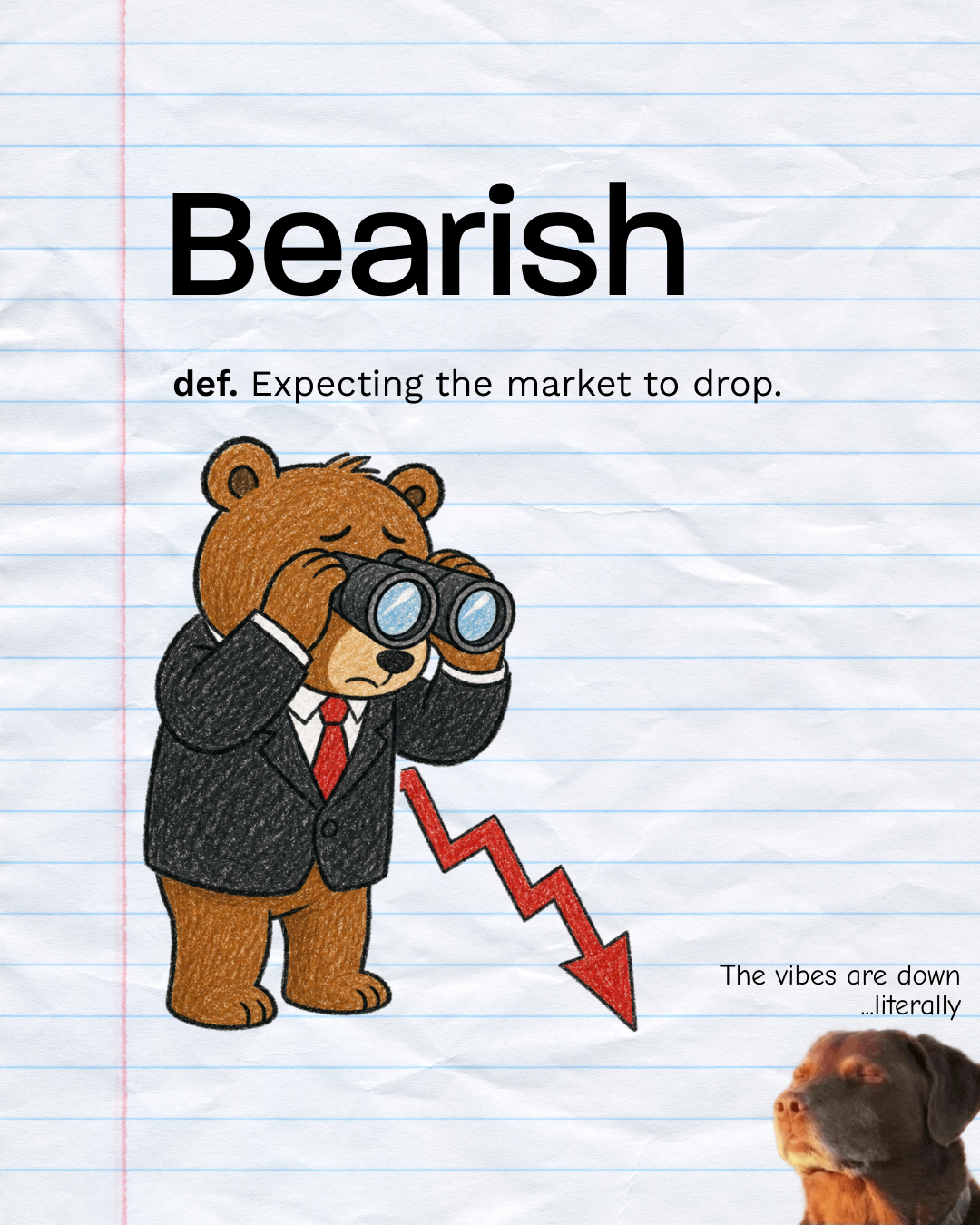
Trader Talk Translated: Bearish = expecting the market to drop.
Why It Matters
Knowing whether traders are bullish or bearish helps you understand what side of the market they're watching. If you're just getting started, practicing in a simulated environment with a prop firm can help you build confidence before risking your own money.
What Is Bid and Ask in Trading? 💸
Ever sold something on Facebook Marketplace?
Someone offers $90.
You want $100.
Once you agree, the deal gets done.
That's basically the bid and ask.
- The bid is the highest price buyers will pay.
- The ask is the lowest price sellers will accept.
Trades happen when the two meet.

Heard someone say "watch the bid"? Translation: buyers and sellers are negotiating in real time.
Why It Matters
Understanding bid and ask helps explain why prices move and why your order doesn't always fill exactly where you expected. Building that market awareness is one of the first skills traders develop on their path to funding with Topstep.
What Is a Candlestick Chart? 🕯️
A candlestick shows how price moved during a specific period of time, whether that's 5 seconds, 5 minutes, or 1 hour.
Each candlestick shows four prices:
- Open
- High
- Low
- Close
The body shows where the price opened and closed.
The thin lines above and below the body are called wicks. They show the highest and lowest prices reached during that time period.
Green means price closed higher.
Red means price closed lower.
Instead of watching every tick, one glance at a candlestick shows you how price moved and whether buyers or sellers were in control.
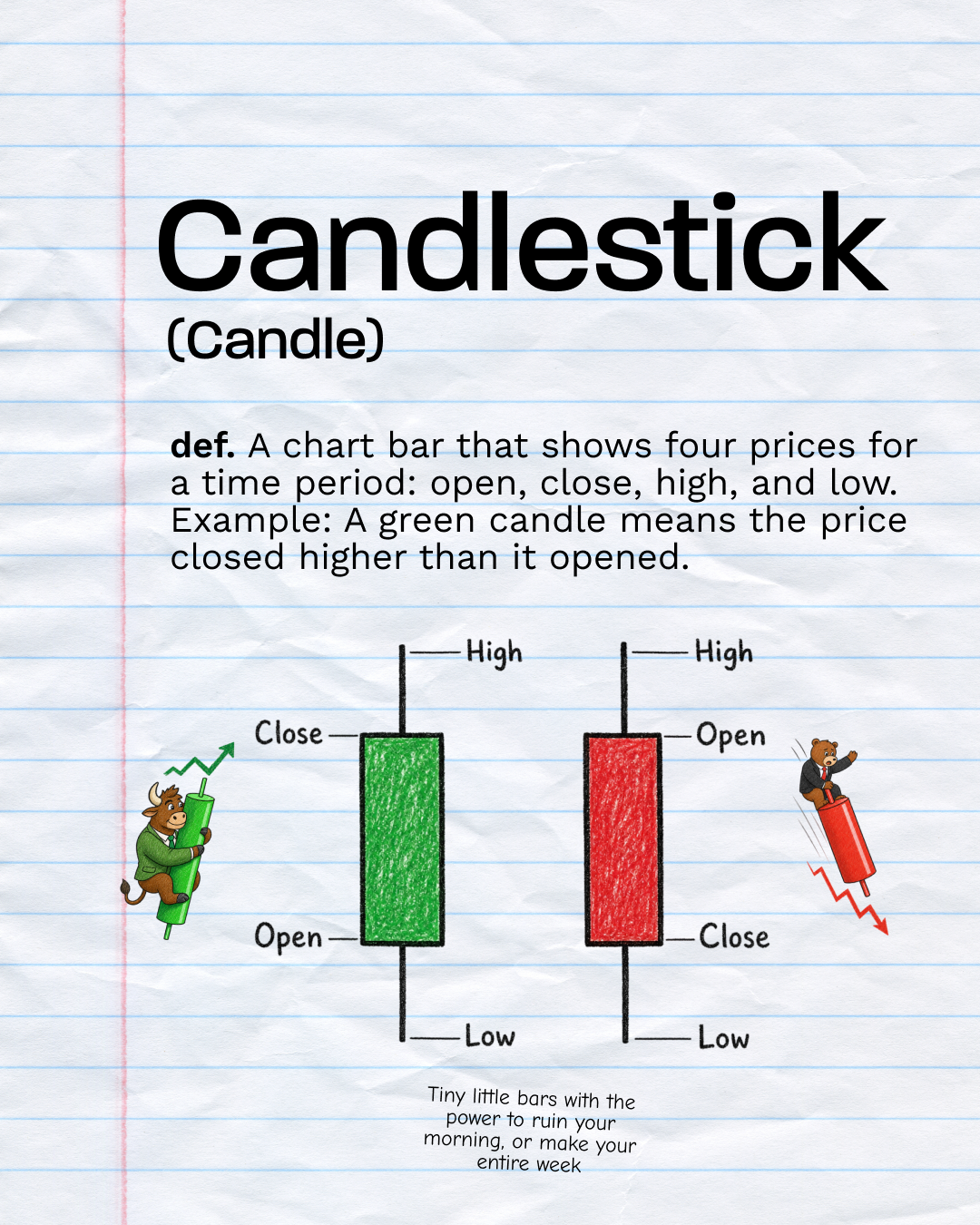
Trader Talk Translated: Tiny little bars with the power to make your day… or ruin it.
Why It Matters
Learning to read charts and candlestick patterns is one of the first skills traders develop. That's why Topstep lets traders practice with real market data in a simulated trading environment before trading with Funded Accounts.
What Is a Futures Contract? 📜
A futures contract is simply what you're trading.
Whether it's trading the S&P 500, crude oil, or gold, you're trading contracts tied to those markets.
No, barrels of oil aren't showing up at your front door.
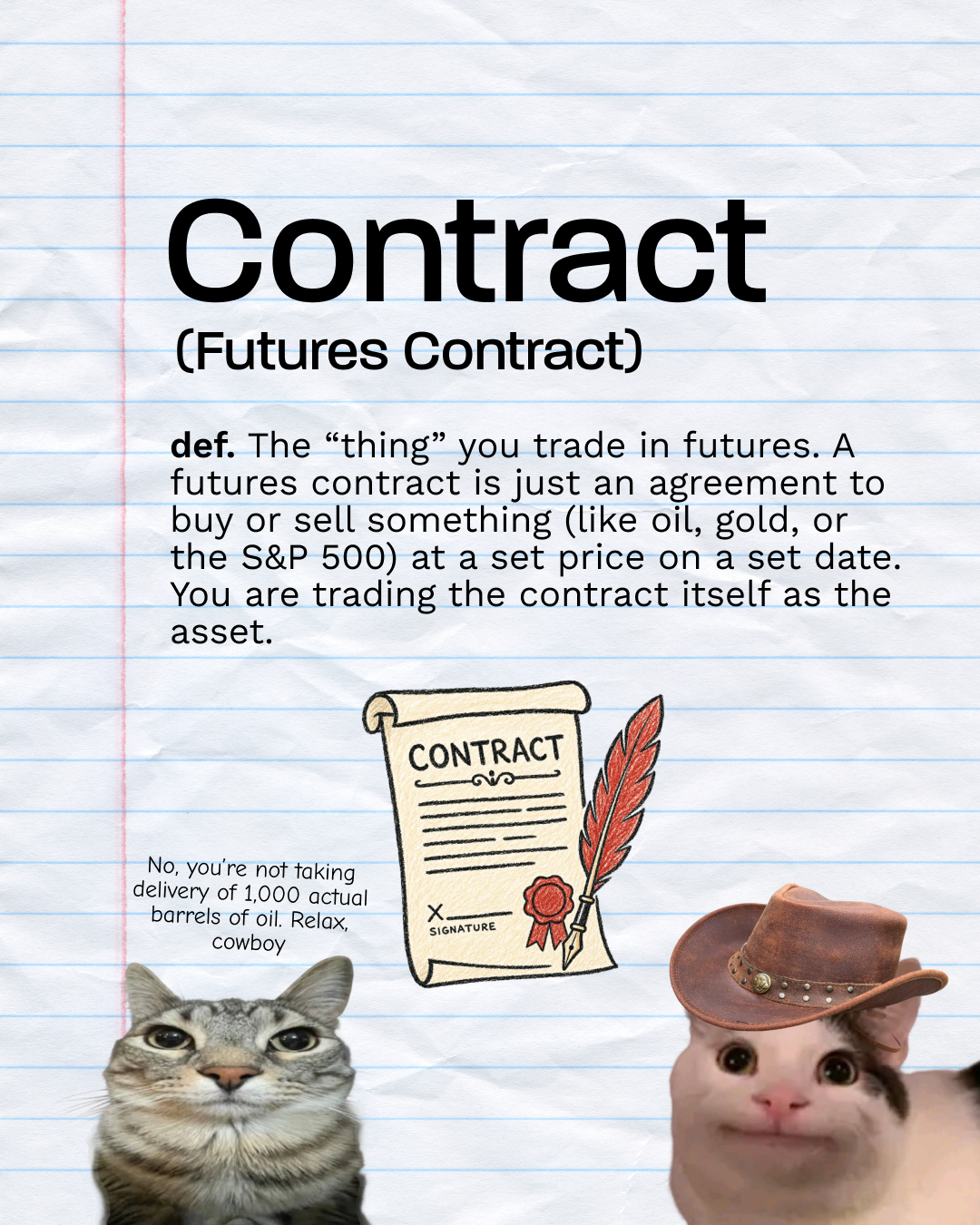
Heard someone mention contracts? Translation: it's just what you're trading.
Why It Matters
The more comfortable you become with futures contracts, the easier it becomes to understand different markets and find products that fit your style. Topstep supports a wide range of futures markets, from oil to energy and metals.
What Is Buying Power in Trading? 💪
Think of buying power as your trading budget.
More buying power gives you more flexibility.
But bigger size doesn't automatically mean better trading.
Consistency beats swinging for the fences.
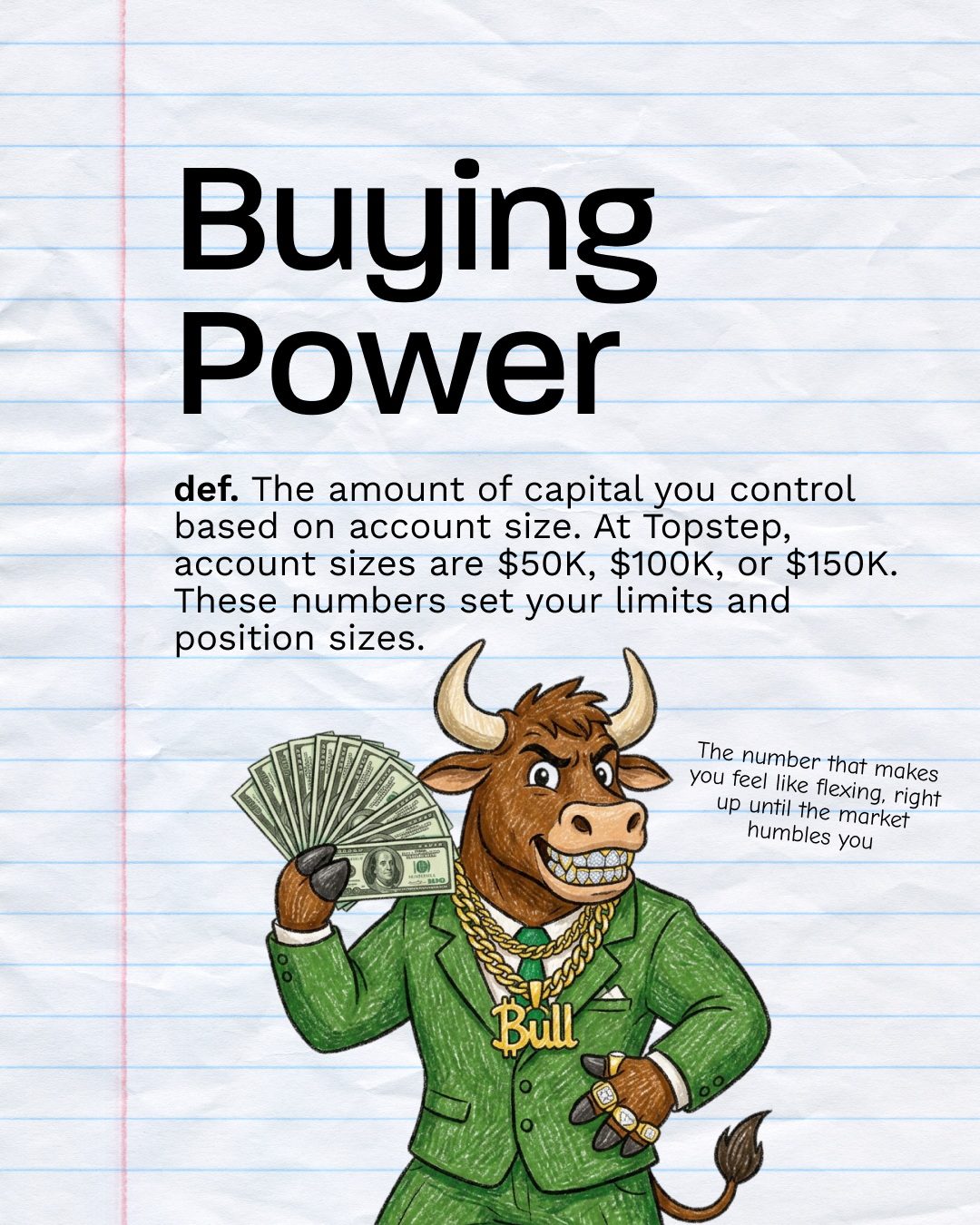
Trader Talk Translated: Buying power tells you how much capital you control.
Why It Matters
Topstep account sizes are designed to help traders develop consistency and risk management. Bigger swings don't always lead to better results.
What Does CME Stand For? 🏛️
In trading, CME stands for the Chicago Mercantile Exchange.
It's the world's largest futures exchange, where many futures products are traded.
Every chart you look at uses CME market data, whether you think about it or not.
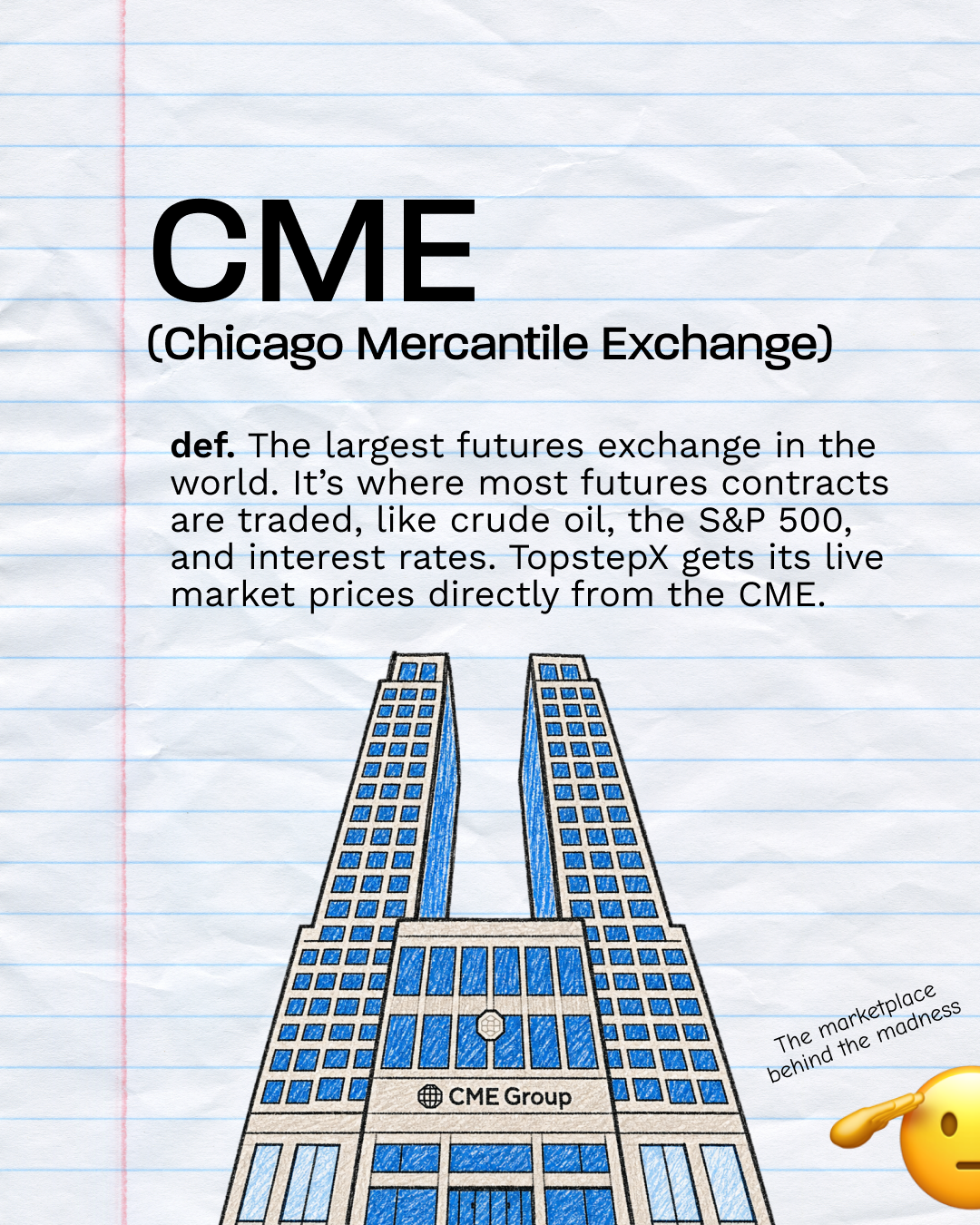
Trader Talk Translated: The CME is where many futures markets live, and where the prices on your charts come from.
Why It Matters
Understanding where prices come from helps connect the dots between the charts on your screen and the markets you're trading. That's why thousands of traders tune into TopstepTV to watch experienced traders break down the same live markets they're seeing.
What Is Copy Trading? 🔁
Copy Trading automatically sends the same trade to your other accounts.
That means potential profits and losses are copied across every linked account.
It's a convenient way to manage multiple accounts, but it's still important to manage your risk.
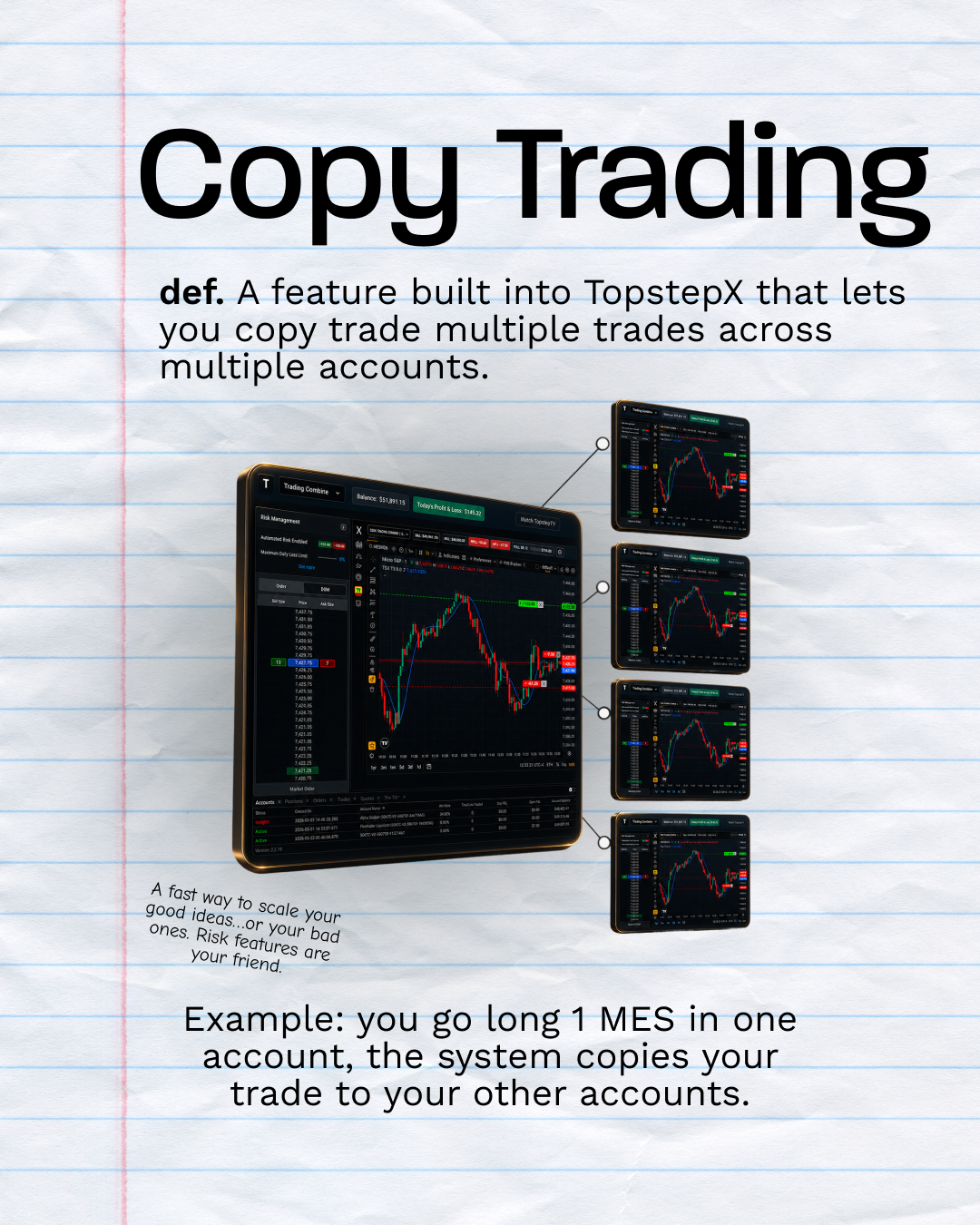
Place one trade. Let TopstepX do the repetitive work.
Why It Matters
One good setup can create opportunities across multiple accounts. TopstepX, Topstep's exclusive trading platform, includes built-in Copy Trading to help traders scale their execution while staying focused on their setups.
Learning Futures Trading Starts With the Basics
Here's the thing.
No trader learns everything before placing their first trade.
You learn a little.
You get reps.
Then you learn some more.
Over time, words like bullish, bid and ask, and buying power stop sounding like jargon and start feeling like second nature.
The same goes for trading.
You don't build confidence by memorizing terms. You build it by putting them into practice.
That's why many traders start with the Trading Combine®. With 1 Step and 1 Rule, you can practice with real market data in a safe, simulated environment and build the skills that matter most.
A $50K Trading Combine starts at just $49 and is backed by a 14-Day Satisfaction Guarantee. You could start today, get funded tomorrow, and put yourself on the path to earning instant payouts.
Start your Trading Combine today.
Futures Trading Terms Explained FAQs
Are trading terms the same across all markets?
Mostly, yes… But context can change. While basic trading terminology like "bid and ask" apply everywhere, day trading terms for futures focus on "contracts" and "buying power" rather than "shares". Knowing the difference helps you speak the language, whether you're trading the S&P 500 or crude oil.
Why should you learn trading terms before you start trading?
Trading without knowing the language is like flying a plane without understanding the dashboard. Learning trading terminology for beginners keeps you from making costly mistakes. It helps you understand market commentary, manage risk properly, and feel confident when you finally start trading with live market data.
What are the most important day futures trading terminology terms for beginners to learn first?
Some of the most common futures trading terms include bullish, bearish, bid and ask, candlestick, futures contract, buying power, CME, and copy trading. Learning these basics helps new traders understand charts and market commentary.
What do bullish and bearish mean in trading terminology?
Bullish means a trader expects prices to rise, while bearish means a trader expects prices to fall. These terms describe a trader's outlook on the market.
What are bid and ask in trading?
The bid is the highest price buyers are willing to pay, and the ask is the lowest price sellers are willing to accept. Trades occur when buyers and sellers agree on a price.
What is a futures contract?
A futures contract is the product being traded. Futures contracts are tied to markets such as the S&P 500, crude oil, gold, and other commodities and financial instruments.
How can beginners memorize trading terminology?
Memorizing new words is all about building active muscle memory rather than just staring at dry definitions. Don't try to cram everything at once. One of the best ways to learn trading terms for beginners is by keeping a log, which is why we recommend reading about how trading journals work to track your progress.
How can beginners learn futures trading?
New traders often start by learning common trading terminology, studying charts, and practicing in a simulated environment using real market data before risking their own money. To help you get started, Training Camp is our free, interactive learning series with short lessons you can complete at your own pace. It covers trading fundamentals to futures markets. Check it out along with our 16-part Trading Foundations video course that covers the core concepts and principles of futures trading for free.