Highlights
- The four main order types every trader should know: market, limit, stop, and trailing stop.
- A market order fills instantly at the current price—great for fast-moving markets, but less precise for price control.
- A limit order lets traders choose their entry or exit price, giving more control but no guarantee it’ll fill.
- A stop order triggers once the market reaches your set level, helping traders protect against losses or catch breakout moves.
- A trailing stop moves automatically with price, locking in profits while keeping trades open as long as momentum continues.
- Learning when to use each order type helps traders manage risk, stay consistent, and reduce emotional decisions.
- Practicing in a simulated environment, like Topstep’s Trading Combine, helps traders build skill and confidence before trading live.
You nail the setup, price finally moves your way… and then bam. You’re stopped out too soon. Or worse, you hit the wrong order and end up in a trade you never meant to take. Sound familiar?
Many day traders have felt the pain of getting stopped out right before price keeps running. Don’t let that be you.
Before your trade ever hits the market, you need to decide how you want it executed. Order types are the tools in your trading toolbox, each with a specific purpose. Used wisely, they help you protect profits and trade with confidence. Used carelessly, they can create confusion or unexpected losses.
Before we dive into the details, let’s zoom out.
What is an order in trading?
An order is an instruction you give your broker to buy or sell in the market. Every order has three parts:
1. What you want to trade (the product, like a futures contract)
2. How much you want to trade (your position size)
3. How you want it executed (the order type)
That last piece is where many beginners trip up. The type of order you choose controls whether you enter right away, wait for a specific price, protect yourself from losses, or lock in profits.
You’ll also hear the phrase “fill an order.” That just means your trade went through. The market matched you with someone on the other side: if you wanted to buy, a seller was found; if you wanted to sell, a buyer was found.
Now let’s walk through the four most important order types every beginner should know: Market Orders, Limit Orders, Stop Orders, and Trailing Stops.
The 4 main types of orders in trading
Market orders: the “get me in now” button
A market order is the quickest, easiest way to place a trade. You’re basically saying: “Fill my order right now at whatever the going price is.”
- Upside: Speed. You’re guaranteed to get into (or out of) the market right away. This is especially useful if the market is moving fast and you don’t want to miss the move.
- Downside: No price control. In fast markets, you might end up paying more or selling for less than you expected. This is called slippage (the difference between the price you wanted and the one you actually got). Think of it like trying to grab something off a moving shelf. The price shifted before your order could land.
Beginner Tip: Use market orders when getting in quickly is more important than the exact price. For example, if big news drops and you want to be in the trade immediately, a market order makes sense.
Limit Orders: Getting the Price You Want
A limit order lets you set the price you want and wait for the market to meet you there. You’re saying: “Only fill my order at this price or better.”
There are two basic types:
- Buy Limit:
You want to buy below the current price (buying the dip). Example: Price is 100, but you only want to get in if it drops to 98.
- Sell Limit:
You want to sell above the current price (selling the rally). Example: Price is 100, but you only want out if it climbs to 102.
Once you understand the two limit order types, the next step is knowing what makes limit orders powerful and where they can hold you back.
- Upside: Control. You won’t pay more or sell for less than you planned. This helps you stick to your trading plan and avoid emotional decisions.
- Downside: No guarantees. If the market never reaches your limit price, your order won’t get filled, and you’ll watch the trade move without you.
Beginner Tip: Think of limit orders as “setting your price tag.” You’ll only trade when the market offers the deal you want, whether that’s buying the dip or selling the rally.
Stop Orders: Protecting Yourself from Losses
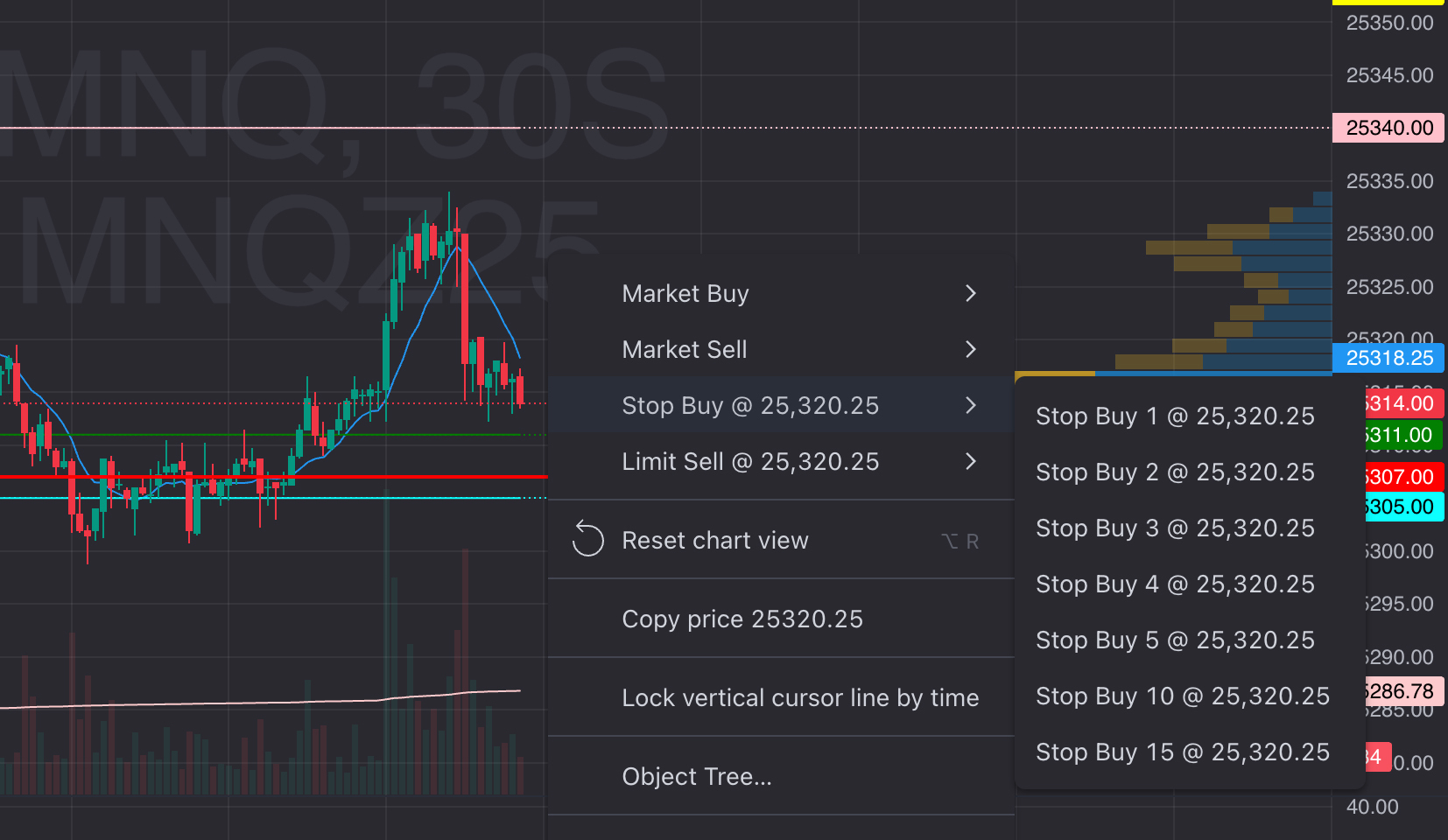
A stop order tells the market, “Trigger my trade once price reaches this level, then get me in (or out) right away.” Unlike a limit order, which is about waiting for a better price, stop orders are about confirmation. You only trade once the market proves itself by hitting your trigger. There are two main uses:
- Sell Stop (stop-loss):
Protect yourself. Example: You bought at 100, and you set a sell stop at 95. If price drops to 95, you’re out before the loss gets worse.
- Buy Stop (breakout entry):
Catch momentum. Example: Price is 100, and you set a buy stop at 102. If price breaks higher, you get in automatically.
The next steps are knowing the ups and downs of stop orders.
- Upside: Protects you from big losses and lets you trade with momentum.
- Downside: Fast markets can cause slippage, and sometimes you’ll get stopped out by a quick spike.
Beginner Tip: Always place a stop order when you open a position. Think of it as your safety net. Decide beforehand how much you’re willing to risk, and set your stop accordingly.
Trailing Stops: Locking in Profits as You Go
A trailing stop is a stop order that moves with the market. You set it a fixed distance away, and as price rises, the stop follows. If price falls back by that distance, the trade closes.
Example: You buy at 100 with a 5-point trailing stop. Price climbs to 120, so your stop trails to 115. When the market finally pulls back (drops), you exit at 115, keeping profit without guessing the top.
- Upside: Flexibility. Trailing stops let your winners run while protecting profits.
- Downside: If your trailing stop is set too tight, you might get stopped out early by normal market fluctuations before the bigger trend plays out.
- Beginner Tip: Use trailing stops to stay disciplined. They take emotions out of the decision to “take profit” and can help you avoid giving back gains when the market turns.
Here’s a quick review of how each order type works, and when traders use it to trade smarter.
| Order Type | Purpose | Upside | Downside | Best Used When |
| Market Order | Enter or exit a trade immediately | Fast execution | No price control; possible slippage | You need to get in or out quickly |
| Limit Order | Enter or exit at a specific price | Price control | May not fill if price never hits | You want to buy low or sell high |
| Stop Order | Trigger a trade once price reaches a level | Protects from big losses; catches momentum | May trigger from short-term spikes | You want to cap losses or catch breakouts |
| Trailing Stop | Protect profits automatically | Locks in gains as price moves | Can stop out early if set too tight | You want to ride trends but manage risk |
Putting it all together – choosing the right order type
Here’s a quick recap:
- Market Order: Fast entry/exit, but no price control.
- Limit Order: Price control, but no guarantee of getting filled.
- Stop Order: Safety net to protect against losses.
- Trailing Stop: A moving safety net that locks in profits as trades go your way.
Each order type has strengths and weaknesses. The key is knowing when to use them, and combining them to fit your strategy.
For example, a beginner trader might:
- Enter with a limit order at a price level they’ve identified on their chart.
- Place a stop order right away to cap losses.
- Add a trailing stop once the trade is in profit, letting the market decide how far it can run.
That’s how order types work together to give you structure and protect your capital.
Want to see these order types in action? Check out Topstep TV for videos where funded traders break down how they use market, limit, stop, and trailing stop orders in real trading conditions.
Final thoughts
Many beginners skip learning order types because they seem too technical. Understanding these basics can be a game-changer. They keep you from making emotional decisions in the heat of the moment and help you stick to your plan.
Reading about them isn’t enough. You need to use them. You need reps. Start by practicing each order type in a simulated account with a prop firm like Topstep. With Topstep’s Trading Combine, you get real market experience. It’s the safest way to learn how orders behave, build discipline, and prove your skills. The more reps you get, the more natural execution becomes, so you can focus on strategy instead of scrambling over missed fills.
Trading is already tough. With the right order types in your toolbox, you’ll trade smarter, protect yourself, and give your winners room to run.
For more trading insights and strategy tips, explore the latest articles on the Topstep Blog.
Frequently asked questions:
What is the difference between a market order and a limit order?
A market order executes immediately at the current price, while a limit order waits until the market reaches the price you choose. Market orders prioritize speed, and limit orders prioritize control.
When should traders use stop orders?
Stop orders help you manage risk or jump on breakout moves. For example, a sell stop can protect you from deeper losses, while a buy stop can help you enter as momentum builds.
How do trailing stops help traders manage profits?
A trailing stop automatically moves with the market. When price rises, your stop level adjusts upward, helping you secure gains while staying in the trade as long as it continues to move in your favor.
What is the best way to practice using different order types?
The best way to learn is by testing order types in a simulated trading environment. Practicing with Topstep’s Trading Combine lets you experience real market conditions safely while developing confidence and consistency.
How do order types help traders manage emotions while trading?
Order types create structure and help to reduce impulse decisions. By setting entry, stop, and target levels in advance, traders follow their plan instead of reacting emotionally. This approach builds confidence and promotes consistent execution.
Can using the wrong order type lead to losses?
Yes. Using the wrong order type can cause missed trades, poor fills, or unexpected exits. For instance, a market order in a volatile market can result in slippage, while a limit order may never trigger. Knowing how each order functions helps prevent costly mistakes.