Highlights
- Futures prices move based on supply and demand, not random price action.
- Economic reports like CPI, NFP, and FOMC decisions can trigger fast volatility.
- Federal Reserve policy and interest rate expectations strongly influence futures markets.
- Global events and overnight sessions often set the tone before the U.S. open.
- Trader sentiment and market psychology can move prices even without news.
Every futures price move starts with a story: news, data, or emotion.
If you’ve ever stared at a chart and wondered why the market suddenly snapped higher or dove straight down, you’re not alone.
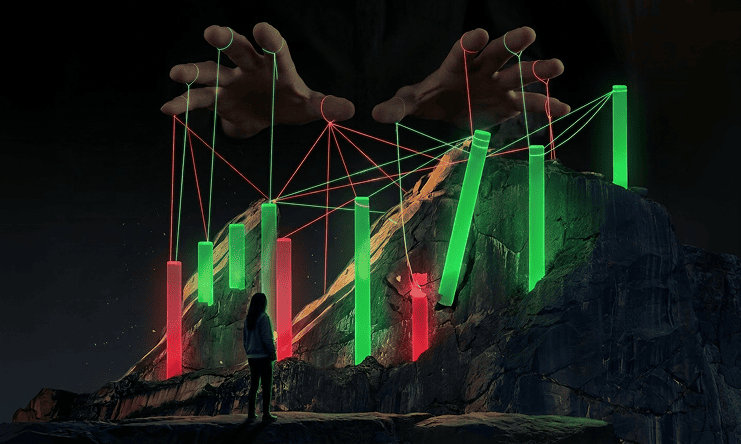
Futures prices don’t move randomly. They react to stories, sometimes obvious, like a major economic report, and sometimes subtle, like shifting trader sentiment.
Understanding what moves futures prices helps you trade with more control instead of feeling like the market is happening to you.
This guide breaks down the core drivers behind futures price movement, so you’ll understand why price is moving, prepare for volatility, and react like a pro when things get loud.
Let’s dive in.
1. Supply & demand: The core engine behind every move
At the end of the day, prices move because buyers want in or sellers want out. In futures, supply and demand show up as:
- Buying pressure → price rises
- Selling pressure → price drops
- Volume spikes → strong interest at key levels
- Trend days → one side stays in control
For commodity futures, real-world supply (oil production, crop yields, etc.) also plays a role. For index futures, “demand” usually comes from changes in equity sentiment or liquidity.
Trader takeaway: Price reacting strongly at a level usually means supply/demand just shifted, and that’s your signal.
2. Economic news & data releases
Few things fire up the futures markets like scheduled reports. Traders around the world watch these releases, and the reaction is often immediate.
Some of the biggest market movers include:
- Consumer Price Index (CPI) – inflation data
- Jobless claims – weekly unemployment filings
- Nonfarm Payrolls (NFP) – employment strength
- Gross Domestic Product (GDP) reports – overall economic growth
- Federal Open Market Committee (FOMC) statements & rate decisions – interest rate policy
- Purchasing Managers’ Index (PMI) & Institute for Supply Management (ISM) reports – business activity
Why? Because these reports change expectations about inflation, growth, and interest rates… the stuff markets are built on.
Surprise numbers = fast volatility.Expected numbers = quieter reaction.
Trader takeaway: Know the economic calendar. If it’s 8:30 AM CT on a data day, expect a jolt.
3. Federal Reserve policy & interest rates
This deserves its own section because interest rates are one of the most powerful forces in finance.
When rates rise, markets tend to cool off. When rates fall, risk-taking usually increases.
Sometimes a full speech moves markets. Sometimes it’s a single sentence.
Trader takeaway: Always know when Fed speakers are on the calendar. Markets can turn on a dime.
4. Global events & breaking news
World events hit futures markets faster than almost any other asset class. The CME is open nearly 24 hours a day, so markets are constantly digesting:
- geopolitical tensions
- natural disasters
- unexpected announcements
- company earnings affecting index futures
- global market moves (Asian & European sessions)
If you wake up to a huge gap, chances are something happened across the globe.
Trader takeaway: Overnight sentiment sets the tone. Know what happened globally before placing your first trade.
5. Trader sentiment & market psychology
Sometimes markets move not because of news or data, but because of emotion.
That includes:
- fear and panic
- greed and FOMO
- herd behavior
- overreaction to headlines
- short-covering rallies
- profit-taking into strong moves
This is why the chart can move even when the news feed is silent. The catalyst is traders themselves.
You’ll see sentiment in:
- how price behaves at key levels
- how strong or weak moves look
- whether buyers or sellers keep stepping in
Sentiment isn’t random. It’s visible if you know where to look.
Trader takeaway: The market’s mood can show up on the chart long before it shows up in the news.
Want to learn how to read these futures price movements with confidence?
The best way to understand what moves futures prices is to practice seeing it happen in real time with structure, rules, and support around you.
You only grow this skill by watching the market move while you’re actually trading it, but that doesn’t mean you should risk real money learning.
That’s where Topstep comes in. If you’re still building your foundation, Topstep’s Futures Trading 101 guide walks through the basics of how futures markets work before you start applying these concepts in live market conditions.
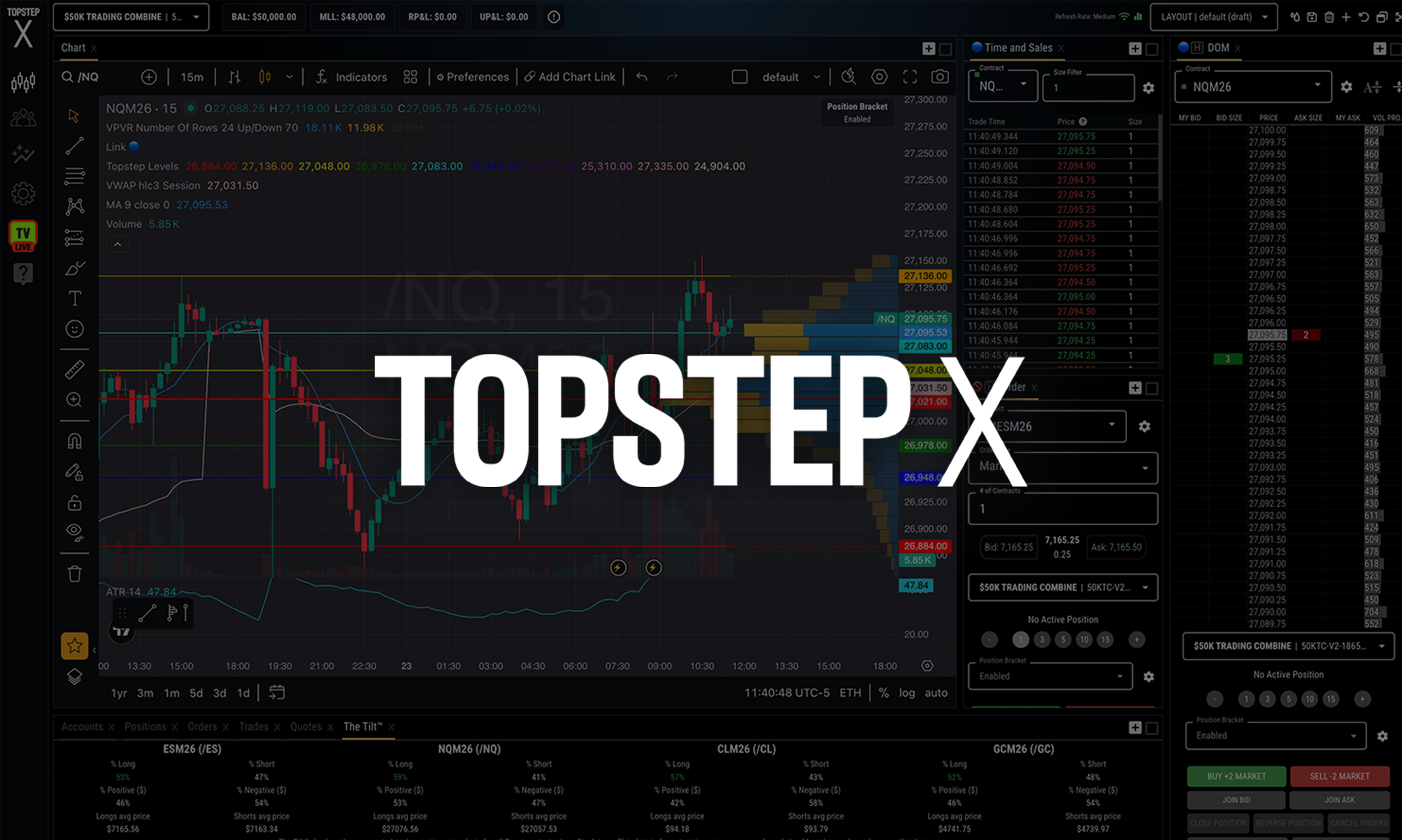
With Topstep, you start in the Trading Combine®, a simulated environment that mirrors the real futures market but protects your capital while you learn:
- You can watch how CPI, NFP, Fed days, and surprise headlines actually move the chart.
- You can see where traders get trapped and where momentum flips.
- You can practice reacting with discipline, not emotions.
- You can build the confidence to trade the moves that matter.
And when you pass the Trading Combine, Topstep moves you into a Funded Account®, where you can take real payouts without ever depositing trading capital. You keep 90% of what you earn, and Topstep covers the losses, so you can focus on reading the market instead of worrying about blowing up your own account.
It’s the smartest way to learn how futures really move. You’re practicing in the same conditions, with the same volatility, the same news drops, the same emotional swings… but without the financial damage that usually comes with the learning curve.
Start your journey with the Trading Combine and start building the skill to read the market like a pro.
Frequently asked questions
What is a futures contract, and how do futures prices move?
A futures contract is a standardized agreement to buy or sell an asset at a set price on a future date. Futures prices move as traders react to changes in supply and demand, economic data, interest rate expectations, and market sentiment throughout the trading day.
What are the main factors that move futures prices?
Futures prices are primarily influenced by supply and demand, economic reports like CPI and NFP, Federal Reserve policy, global events, and trader psychology. Volume, momentum, and open interest help reveal how strongly the market is reacting to these drivers.
Why does the closing price matter in futures trading?
The closing price shows where buyers and sellers agreed to transact at the end of the trading day. It often shapes overnight sentiment, affects margin requirements, and influences how traders prepare their futures trading strategy for the next session.
How does open interest help explain futures price movement?
Open interest measures how many futures contracts remain open. Rising open interest during a price move often confirms strong participation, while declining open interest can signal profit-taking or weakening conviction behind the move.
Why do futures prices react so quickly to economic news?
Futures markets trade nearly around the clock, so they respond immediately to new information. Reports like CPI, FOMC statements, and employment data can rapidly shift expectations, leading to sharp volatility in futures prices.
How do commodities like natural gas and precious metals behave in futures markets?
Natural gas and precious metals futures are sensitive to supply conditions, weather, geopolitical events, and inflation expectations. These factors can create sudden price swings as traders adjust positions based on new information.
How does risk management fit into a futures trading strategy?
Risk management helps protect traders during fast market moves. Defining risk per trade, using stop losses, and managing position size allow traders to stay disciplined when futures prices move unexpectedly.
Are futures considered financial instruments?
Yes. Futures are financial instruments used to speculate on or hedge against price movement in commodities, stock indexes, and interest rates. Their leverage makes understanding price drivers especially important.
Why does trader sentiment move futures prices even without news?
Futures prices can move on emotion alone when fear, greed, or short covering takes over. These sentiment-driven moves often appear on the chart before any explanation shows up in the news.
How can understanding futures price drivers improve your trading day?
Knowing what moves futures prices helps traders anticipate volatility, avoid surprises, and make better decisions throughout the trading day instead of reacting emotionally to every price swing.